In 2022 Dr. Johanna Nicholas published a study on injury rates in pole dancers. 66…

We Said Pole Is for Everyone… Now Prove It
I know, I know. My last two blogs were all about the plight of being a fat-bodied dancer. I wrote them with love, hoping to raise awareness and give folks something to chew on. I started there because it’s the most obvious introduction to who I am. Being visibly fat is not something you can hide. When I, Luna Riots, walk into a studio, it’s clear that I am in a bigger body. There are parts of our identities that can be seen or heard. Body size and skin color, for example. But what about the pieces of us that aren’t visible? The ones that shape our experience just as much, even if they don’t announce themselves when we walk in?
If you’re lucky enough to dance in a studio or club that reflects real diversity, that’s beautiful. You’ve probably already had some exposure to what I’m about to get into. But if your pole community leans a little heavy on Lululemon energy and light on lived experience, let this be your nudge to look a little closer. Pole fitness is often described as empowering, liberating, and inclusive. Many of us came to it looking for strength, confidence, and community, and many of us found those things. But as the pole world continues to grow, so must our understanding of who is included, who is not, and why that matters.
Intersectionality, a term coined by Kimberlé Crenshaw in 1989, helps us examine how multiple aspects of a person’s identity combine to shape their experiences. It’s not just about race or gender or body size. It’s about how those things overlap and influence each other. A plus-size Black pole dancer will likely experience the industry differently than a thin white one. A disabled queer performer may face different barriers than a cisgender straight instructor. When we talk about inclusion in pole spaces, we have to talk about these layers. Without understanding intersectionality, our efforts to be inclusive can unintentionally cause harm.
Many pole studios aim to be welcoming, but “welcoming” is not the same as equitable. If your studio says “everyone is welcome,” but doesn’t reflect the diversity of the community, or limits opportunities for some folks, it’s worth asking why. If your teachers aren’t trained to navigate the specific needs of marginalized students, or if your policies don’t take into account systemic barriers, then people might feel tolerated rather than truly supported. So, what does training for intersectional awareness look like in the pole world?
- It starts with acknowledging that pole doesn’t exist in a vacuum. We bring our identities with us to class. Our histories. Our trauma. Our joy. Our fears. A truly inclusive space doesn’t ask people to leave those at the door. It makes room for them.
- That means investing in education. It means seeking out workshops and reading material that focus on anti-racism, fat liberation, accessibility, gender inclusivity, and more. It means recognizing where our blind spots are and being open to learning from others. It means paying marginalized instructors to lead trainings, share lived experience, and influence studio culture. Not just as guest performers, but as voices that shape the future of the industry.
- It also means shifting how we talk about bodies. Not everyone who comes to pole for the same reasons. Some are trying to feel safe in their skin. Some are reclaiming their sexuality. Some are navigating chronic illness, or healing from trauma, or building a relationship with movement that isn’t based in shame. When instructors comment on bodies, even with good intentions, it can be harmful if not done with care. Learning trauma-informed practices and expanding the language we use in class are small but powerful ways to support a broader range of students.
As someone who identifies as a fat, differently abled, neurodivergent, queer cis woman, I know what it’s like to walk into a studio and scan the room for signs of safety. I also know how transformative it can be when a space gets it right or when I contribute to that safety for others. When access isn’t an afterthought, when options come without side-eyes, then it becomes clear that the space wasn’t just prepared for someone like me, it was expecting me.
Studio owners and instructors hold a lot of power in shaping the tone and safety of a pole space. But students also play a role. We can advocate for inclusive practices. We can support one another when someone speaks up. We can be mindful of our assumptions and how we take up space. Community is not just what we get from a studio, competition team, or club, but what we help create within it. Real inclusion also shows up in the choices we make, especially the ones that cost us something.
- Putting our money where it matters. When we choose to support studios, instructors, brands, and creators who live these values, we’re investing in the kind of pole world we want to see. At times, this might mean having fewer options, losing some folks in your day-to-day, or paying a little more. It will take more effort to seek these things out, but it’s worth it. Choosing gear, classes, and spaces that reflect real inclusion (not just marketing) is a powerful part of this work.
- And let’s talk about communication, real quick. Studios can easily become places where gossip and assumptions spread. But when we lead with curiosity, ask questions, and speak directly with one another, we often find we have more in common than it first appears. Honest conversations build stronger communities, especially when they come from a place of care and connection.
No one is asking for perfection. We are asking for effort and accountability. For a willingness to learn and grow. That is the heart of intersectional practice. It means recognizing that there is always more to understand and that progress requires intention. Pole fitness has the potential to be a powerful space for liberation, connection, and joy. But that potential is only fully realized when everyone has access to it. Not just access to the pole itself, but to a space where they are seen, affirmed, and celebrated.
If we say pole is for everyone, then we need to back that up with more than just cute captions and “good vibes.” The work starts with listening, grows through learning, and shows up in what we do. Inclusion isn’t a tagline, it’s a practice. If we mean it, our receipts better show it.
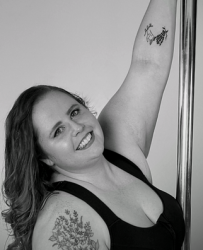
Luna Riots is a Tucson-based amateur pole dancer committed to fat-body liberation and empowerment through movement. With a lifelong love for dance—spanning from cheerleading in her teens to embarking on her pole journey in 2023—Luna pairs her passion with a fierce sense of advocacy. As a former substitute pole fitness instructor and now an independent mentor, she uplifts dancers of all body types, focusing on welcoming newcomers to the sport and celebrating the unique beauty and strength of every individual.
Latest posts by Luna Riots (see all)
- We Said Pole Is for Everyone… Now Prove It - September 19, 2025
- The Pole Isn’t the Problem: Common Challenges in Supporting Bigger Bodies in Pole Fitness - July 4, 2025
- To My Curvy Sisters - March 24, 2025
Related Posts