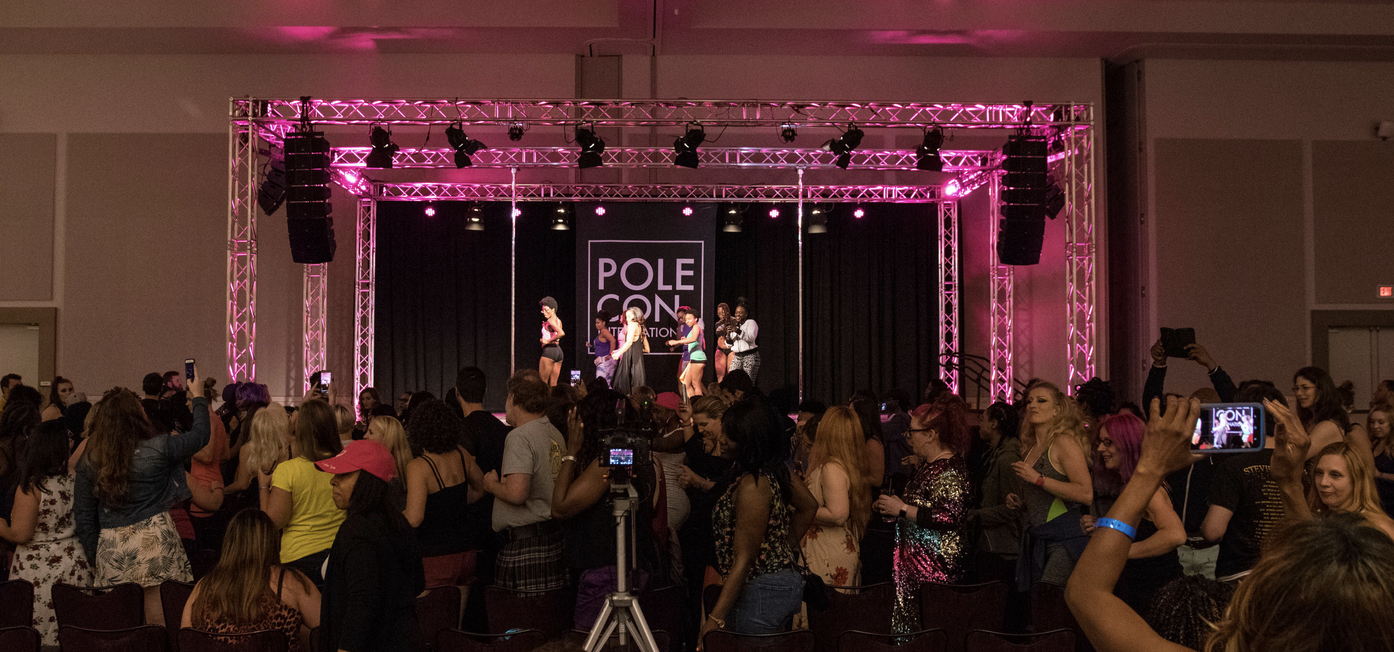
At shows and competitions, the performers, competitors, and producers all have clear expectations for roles…
Injury rates in pole and why this is important for multiple reasons
In 2022 Dr. Johanna Nicholas published a study on injury rates in pole dancers.
66 pole dancers (primarily women) from 41 studios across Australia were followed for 12 months and asked to self-report injuries in an initial questionnaire and in a daily training diary. Only 25 people completed the full study.
This study is currently the first—and might be the only—of its kind for studio polers.
What Dr. Nicholas found was an injury rate of 8.95/per 1,000 activity hours. The most common injuries were to the shoulder in internally rotated positions and to the hamstrings in front split positions.
Comparing this information to other populations
This is a small sample size but still important and now that there is some data for polers , we can compare it to other populations.
There are similar studies done on college sports that have found much higher injury rates amongst college athletes across different sports.
Combining 15 college sports over 16 years, the NCAA found these injury rates:
- 8/per 1,000 activity hours (in game)
- 0/per 1,000 activity hours (in practice)
General college sports (which include a lot of team and lower-body dominant sports) might not be the best equivalent to pole, so looking specifically at college gymnastics, a 10-year study found:
- 78/per 1,000 activity hours (men)
- 37/per 1,000 activity hours (in women)
Not all polers are going to be at the level or age of college gymnasts, so looking at general fitness, another study followed almost 1,000 people from fitness clubs/gyms to look at adult recreational fitness and found an injury rate of 7.83/per 1,000 activity hours.
Why is this important?
Healthcare and training
First, it helps us understand, even with a small sample size, that we should be more carefully loading and training our shoulders and hamstrings in the ranges statistically more likely to be injured, as students, teachers, performers, and swers.
This information can inform how we create classes, how we stipulate warm-up time in performance contracts, and how we help medical providers provide better pre-hab and rehab to all polers.
Insurance and finances
This information is also critical in understanding how insurance works.
Insurance providers are always assessing risk. The riskier an activity it is, the more insurance might increase costs to insure instructors and studios.
Insurance providers might even stop insuring certain activities or put more restrictions on how they insure those activities. In recent years we have seen a more common 12ft cap on the height of poles in a studio setting that insurance providers are willing to cover. Some insurance providers are also requiring more detailed safety plans such as crash mats and “industry standard” safety techniques.
Showing insurance providers the data that pole is only slightly riskier than going to the gym can help keep insurance costs low and ensure that we are all insured for years to come in the unlikely event we need to use our insurance plans.
The bottom line
Hopefully we can continue to have more research done on polers. Ideally these would have larger sample sizes and more specific demographic representation across instructors, performers, and swers as well as separating hobbyists from competitors or potentially hobbyists at different levels to really understand the unique demands that pole puts on the body at every step along the journey. This data will continue to help us train more safely and better inform the industries—like insurance and healthcare—that support the pole industry make decisions that benefit us all.

Colleen Jolly is an entrepreneur and a pole dance enthusiast. She has been poling for 15 years, is the CEO of PoleCon and the Executive Director of the IPIA. She teaches pole, lyra, floorwork, and mobility online and in-person in the DC metro area. She has been active in leadership roles in several international businesses over the past two decades and is also an award-winning pole dancer, artist, writer, and speaker. She is certified in several movement modalities and wrote the book "Mobility for Pole" to help pole dancers move better.
Latest posts by Colleen (see all)
- Updates to PoleCon 2027 - October 12, 2026
- PoleCon: West 2026 Updates from the Survey - October 9, 2026
- What responsibility does the audience have? - October 2, 2026
Related Posts